

Rural America doesn’t offer much in terms of premier shopping centers, luxury dining or a buzzing nightlife. You won’t find highly rated hotels or expensive private schools. But you will find land. Open, expansive, untouched land amongst smaller, close-knit communities, small businesses and farms.
And soon, if not already, you’ll find data centers. They exist in urban areas, too, but with increasing AI demands and the rapid growth of the digital economy, these enormous and powerful facilities need more places to settle in. More land to use. More water to consume. Data centers, as it turns out, need much more than your data to operate. They need natural resources.
But you knew this already because data centers are dominating the national conversation.
As of March 2026, there are 4,011 data centers in the United States, more than any other country by a wide margin— UK (511), Germany (507), and France (344). Which is important, according to leading technocrats and politicians because, we have to beat China (368).
And let’s not be naive. Data centers have been in existence since the 1960s, according to DataCate. Surely you’ve known about them. No? Well maybe you started hearing more about these facilities about ten years ago when the massive, hyperscale data centers began construction. Or maybe you didn’t. But you did, most likely, learn about their growth on a massive scale throughout 2020 and the years proceeding. Unless you were preoccupied with your neighbors who wouldn’t mask their kids or keep six feet apart. The pandemic and all its nuances had a convenient knack for distraction and neighborly discord.
But that was years ago. And nothing brings a community together like the shared experience of Artificial Intelligence, which, by the way, is the driving force in new data center infrastructure. AI can write your novel for you. It can do your homework. It can replace research assistants, medical professionals, teachers, finance jobs, and so much more. ChatGPT and the others can even be a new best friend—your closest confidant. AI can write and play music, make movies or be the beautiful fashion models on screen or in print.
So, of course, we need Artificial Intelligence. And that’s why we need hyperscale data centers. You simply cannot have one without the other. At least that’s the messaging coming from our best and brightest in Silicon Valley and billionaire overlords. These are the people we can trust. These are the people who make the rules.
In my part of the country—Palm Beach County— the developers of Project Tango (a proposed 1.3 million square feet mega facility) are looking to bypass public comment and commissioner votes through an administrative hearing and a quick approval behind the scenes. The land has previously been approved for industrial zoning so there’s most likely no reason why this data center won’t go through.
It’ll get ugly, though. It already has. You see, the data center will be built next to a new elementary school and a relatively new neighborhood called Arden. Arden is a masterplanned community known as an Agrihood with a five-acre working farm right within its gates. Homes are built with environmental-friendly features and residents get to enjoy local produce and locally sourced goods at the Farm Store. By all accounts, Arden is the epitome of green living and doing things “the right way.”
The technocrats from 15 years ago would be so proud. The technocrats of today, however, arguably feel different. Or indifferent. Does it matter? Either way, data centers are happening all across the country, “from the lakes of Minnesota to the hills of Tennessee, across the plains of Texas from sea to shining sea.” So much so that even environmental activist Erin Brockovich is on the case. Who knows, maybe we’ll get a movie out of this one too.
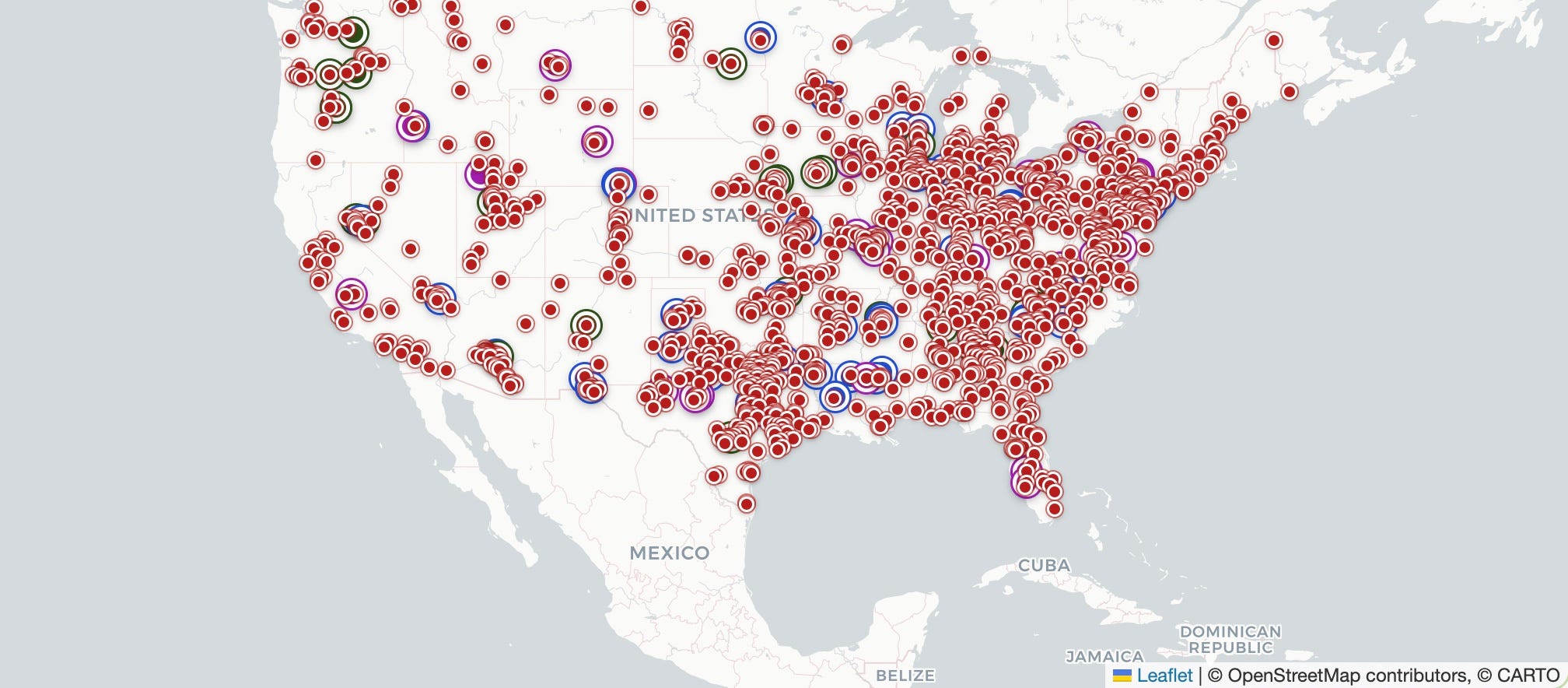
But movie or no movie, the current storyline surrounding data centers is going through a new plot twist: everyday Americans living in these rural areas, including Arden residents, who show up at town halls or connect in online forums and voice concerns can now be labeled anti-tech extremists. In fact, law enforcement agencies are now actively monitoring data center protests and meetings, looking for threats against data centers—real or implied.
Now, don’t worry. You can still ask questions and share opinions, that’s what makes our country so great. But try not to probe too deeply or be too passionate. Don’t make waves or cause some sort of localized revolt that could spread into something much larger. Because we need data centers. We need Artificial Intelligence. If we don’t continue to expand, China could beat us and our country simply may not survive.